

January 1, 2026
By Anne Dabbs,
NCAN TN Support Group Leader, NET Patient
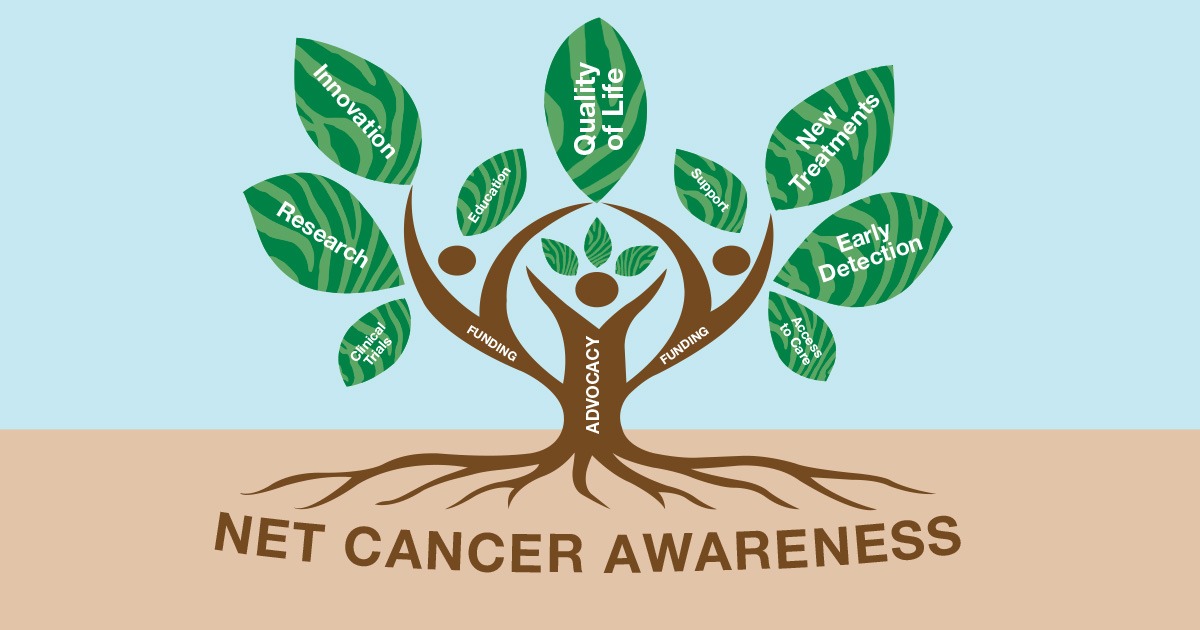
For many of us in our NETs community, World NETs Awareness Day on November 10, 2025, brought up an interesting topic for discussion and reflection. Which is more important, NETs awareness or NETs research? It is not a simple question, and the answers can vary quite a bit depending on who you ask.
• Research requires advanced educational instruction and experience.
• Research requires motivation.
• Research requires money, and often very large amounts of it.
• Research brings us new diagnostic tools, better treatments, and improved patient outcomes. But even before these things are possible, research is built upon a recognized need.
• Awareness is the catalyst.
• Awareness identifies the need.
• Awareness is the instigator for patient registries.
• Awareness starts the drive for additional funding within the medical field, the government, and philanthropic organizations.
• Awareness leads to more clinicians becoming familiar with the disease.
• Awareness is a driver for advocacy, policy change, and additional research.
It is probably safe to say that awareness builds the foundation that allows research to occur.
What does this mean for me, an individual oncology patient whose Neuroendocrine Cancer diagnosis has opened a whole new world?
I am greatly indebted to the NETs research that has provided me with accurate diagnostic tools and procedures, quality surgery from highly respected NETs specialist surgeons, effective disease management treatments, and reliable surveillance tools. I am the appreciative recipient of decades of work, and deeply grateful that I arrived at a path forward that allows me to continue living a rewarding and mostly healthy life.
I am equally indebted to the awareness efforts made by NETs advocates and patients in the years before my diagnosis. For decades, Neuroendocrine Cancer has been considered a rare disease. It was first recognized in 1907 as a slow-growing intestinal tumor that behaved differently from other cancers. The term “carcinoid,” often used to describe it, translates to “cancer like.” Not until the 1960s did the medical field begin to expand its research efforts. It took until the turn of the century for additional first-line treatments to become available and for scientists to better understand that these tumors arise from neuroendocrine cells found throughout the body.
Now, a quarter of a century later, NET Cancer is on the cusp of no longer being considered rare. I have hope that this will result in a larger share of cancer research funding. I have hope that more scientists and researchers will be drawn to the uniqueness of this disease. I have hope that pharmaceutical companies will continue to support our needs.
It has become clear to me that awareness of Neuroendocrine Cancer has been, and will continue to be, an opportunity for all of us to contribute to the advancement of our care.
In 2026, the Neuroendocrine Cancer Awareness Network (NCAN) will once again expand our opportunities to increase education and public awareness for NET Cancer. As we become more knowledgeable and more vocal, we help support research efforts with our gratitude, our advocacy, and our stories. NCAN will continue its support for research as well.
In just a few short weeks, NCAN will share the 2026 calendar of patient conferences. We will be notified of new YouTube podcast topics and speakers. The NCAN NETs hotline will continue to offer confidential conversations with patients. Support group meetings, both virtual and in person, will continue. Opportunities to participate in pharmaceutical surveys, share your story on NETs Get Real podcasts, and contribute to the growth and strength of our NETs family will remain available. There is a place for everyone who wants to advocate for improvements and advancements in our care.
So, which is more important, research or awareness? There is no universal answer. Research and awareness depend on each other. NCAN invites you once again to join us in being the spark that drives everything that supports and encourages our ability to live well with Neuroendocrine Cancer.
We are here for you if you need us.
Disclaimer: NCAN blog posts are the opinions of its writers and are not intended as a replacement for medical advice. Please consult your Health Care Providers for individual concerns.
Recent Comments