

May 1, 2026
By Anne Dabbs,
NCAN TN Support Group Leader, NET Patient
Attending multiple NCAN regional conferences offers attendees the ability to stay informed about current developments in research and treatments. Repeat attendees frequently share how previously learned basic nets information becomes clearer and more relevant to their understanding each time they hear the specialists tell the facts in slightly different verbiage than before.
In this same spirit, this month’s NETS TALK is a repeat from June 2022. The topic?: Scan anxiety. Three separate conversations with NET friends in recent weeks prompted me to share these helpful hints once again as a refresher course for some and new encouragement for others. We hope you find the notes helpful!
Also, Don’t forget that our next regional NCAN conference will be Saturday, June 6, 2026 in New Orleans. Details, and Registration information for this upcoming event can be found HERE. And always remember, We’re HERE. (For you.)
The Reality of Scanxiety And Ways To Manage It.

“Take My Breath Away”
“Every Breath You Take”
“The Air that I Breathe “
These were 3 of the songs which played through my headphones during my recent MRI scans.
Scanxiety is a relatively common buzz word in our Neuroendocrine social media sites. Is it real? Is it silly? How do I deal with it?
Scanxiety Can Be Divided Into Two Camps:
Those who are anxious about the results of the scans and those who are anxious about the actual scan itself. Both are valid concerns and both can be managed.
For those who fear the results, educating yourself about the needs for the scan and the possible outcomes can help manage anxiety. Good communication with your medical team is paramount and can lead to a confidence in their willingness and ability to guide you on your NETs journey, whatever results the scan may bring. Trusting that they are always working in your best interest can lead to a sense of peace.
For patients who struggle with the scans themselves, the cause of angst and the solutions can be quite varied.
A CT scan for many is simply a matter of inconvenience. The dreaded Contrast drink before hand, the waiting, or the multiple images that might be needed, are typically not cause for great angst, just a seemingly major time drain.
A recent advent of several Radio-tracer scans are a source of protocol unfamiliar for many NETs patients. These uncertainties can be alleviated by a phone call to the facility and a short conversation with the nuclear medicine technicians. The scans themselves are fairly quick and typically uneventful.
MRI scans, however, can be a monumental source of anxiety for many patients. Claustrophobia is real and often times, not pretty.
If You Struggle With Claustrophobia Here Are 5 Tips That Can Help:
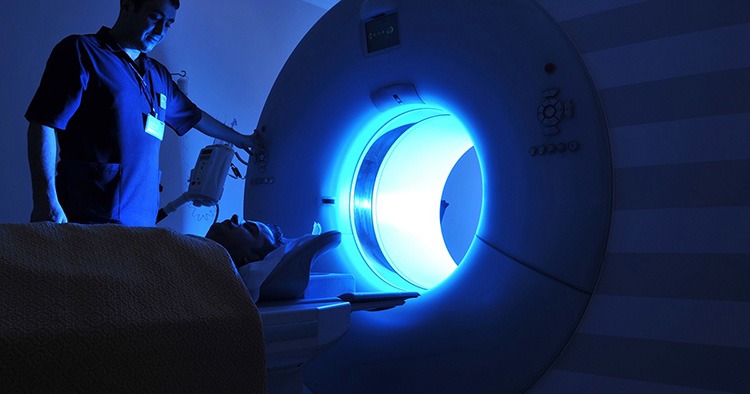
1) Educate Yourself.
An Open MRI machine is not a narrow tube and should not cause any claustrophobic emotions. A Wide Bore Machine is still a closed tube, but it’s opening diameter is approximately 70cm as opposed to the 50-60 cm diameter of a regular machine. 10cm is a huge difference in my claustrophobic mind!
The technicians are typically happy to answer any questions (even the dumb sounding ones) to help reduce your anxiety; it makes their job easier once you arrive.
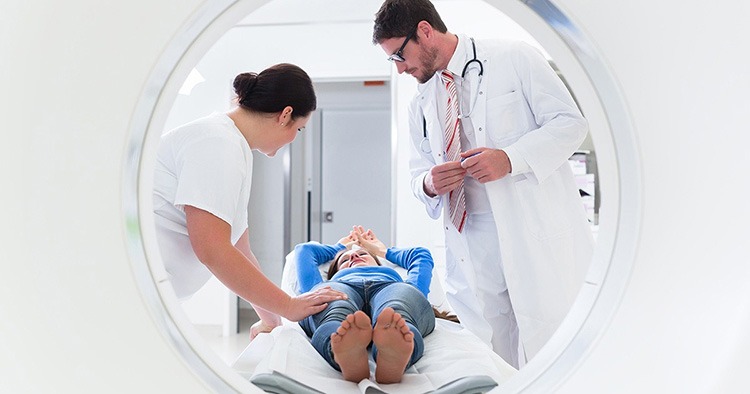
2) Dress Comfortably and Don’t Be Rushed the Day of Your Scan.
Follow all dietary restrictions (they will vary between facilities) and plan a reward afterward.
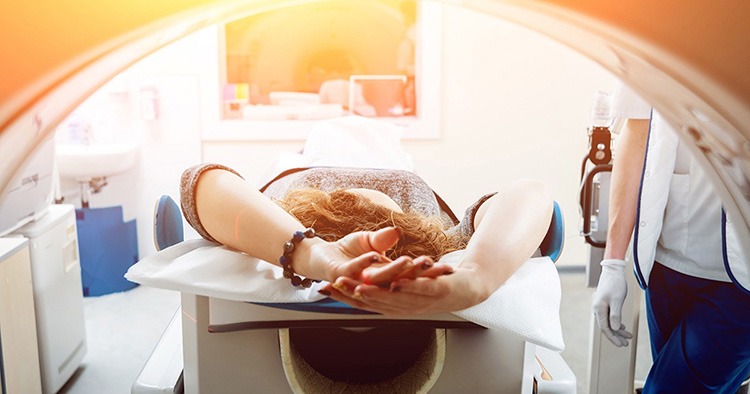
3) Once You Are on the TABLE, Get Comfortable.
Let the technicians position you with pillows and wedges as needed. Ask that your arms be “swaddled” next to your body (or over your head) so that you can relax slightly without fear of brushing up against the tube walls. Ask for folded sheets to be placed under your arms to help keep them cushioned. Close you eyes BEFORE the table begins to move. Keep them closed the entire time, period. You can also ask for a small cloth to be placed over your eyes, if you prefer. Remember to breath through your nose, not your mouth.
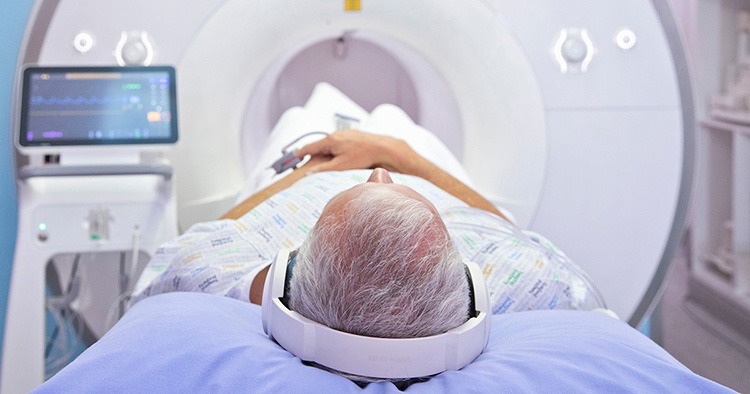
4) Listen to Music.
Hopefully your facility has provided headphones with your musical choices to help muffle the loud noises. To distract yourself, count the songs. A typical radio selection lasts 4 minutes. Keep track on your right hand of the number of songs and use the left hand fingers to track the sets of five. This will allow you to track the length of time passed somewhat accurately without asking “are we done yet?” every 5 minutes.
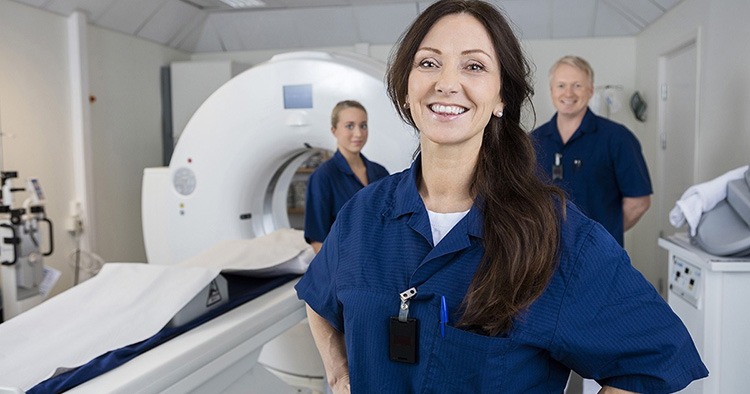
5) Thank Your Technicians.
Genuinely and often. An attitude of gratitude goes a long way for the patient and the technicians. Your good experience is dependent upon their job performance.
If our goal is to live well with Neuroendocrine Cancer, we must accept the necessity and inevitably of scans and tests. This is an opportunity for a NETs patient to be a team player with their medical advisors. Increasingly, our Neuroendocrine specialists are relying on scans more than lab work to diagnose and manage this disease. If we expect them to perform their best for us, we must be willing and able to give them our best efforts as well.
We hope you will visit the NCAN Glossary to familiarize yourself with the variety of scans and their purpose or better yet, join us at an upcoming NCAN Patient Conference. Other Resources and Links for managing the emotional challenges are available as well. Remember, we are a phone call away and we are here to help.
Disclaimer: NCAN blog posts are the opinions of its writers and are not intended as a replacement for medical advice. Please consult your Health Care Providers for individual concerns.
Post a comment