


July 1, 2025
By Anne Dabbs,
NCAN TN Support Group Leader, NET Patient

The Numeric Rating Scale keeps getting me into trouble at my doctor appointments. You know the one—ten little round faces ranging from serene to absolutely hysterical.
Number 1 supposedly represents “no pain,” while 10 is reserved for “the worst pain imaginable.” Every time I’m asked to rate my pain, I get stuck. I’ve learned the hard way that saying “no more than usual” isn’t considered an acceptable response by my physicians.
For many of us living with Neuroendocrine Cancer, pain is a persistent reality. Learning to talk about it accurately and clearly is essential for receiving appropriate care.
Pain is more than just a physical sensation—it’s complex, often involving emotional, cognitive, and functional aspects. The way we describe our pain can make a huge difference. Saying, “A stabbing pain prevents me from lifting my leg enough to go up a stair,” is far more informative than simply stating, “My leg hurts.”
I’ll admit, I fall into the camp of people who tend to dismiss or ignore symptoms until they reach a crisis point. That’s not helpful—to me or my doctor. On the flip side, describing every discomfort as a 10 out of 10 can also hinder effective communication. Being stoic or dramatic are two sides of the same unhelpful coin. The Numeric Rating Scale is meant to open a productive dialogue, not reduce a complex experience to a single number.
It’s also important to remember that the NRS doesn’t account for how pain affects your daily life. Pain intensity varies from person to person, so telling your doctor what you can’t do because of pain—like walking, sleeping, or concentrating—can guide better treatment decisions.
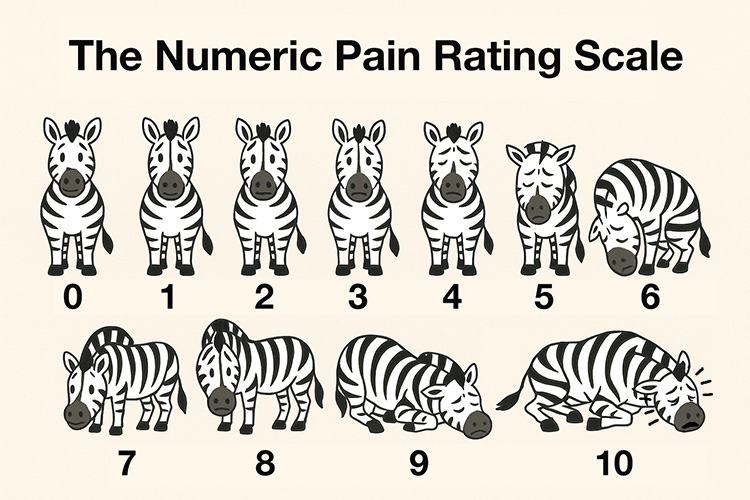
Try using this simple framework to help communicate about your pain more clearly:
• Location: What part of your body is affected?
• Onset: When did the pain start?
• Character: Is it dull, sharp, burning, throbbing?
• Spread: Does the pain radiate or affect other areas?
• Alleviating Factors: What helps reduce the pain?
• Timing: Is it constant, intermittent, worse at certain times?
• Exacerbating Factors: What makes the pain worse?
• Severity: How intense is it—and how is it affecting your life?
Following this framework can help keep your appointment focused and allow your physician to tailor treatments that actually help. It also empowers you, the patient, to stay ahead of chronic pain before it takes over.
At NCAN (the Neuroendocrine Cancer Awareness Network), we know how crucial communication is when navigating a chronic illness like NETs. That’s why we’re committed to offering resources, education, and support to help you become a confident advocate for your own care. We’re HERE to make sure no one faces this journey alone—pain scale and all.
Disclaimer: NCAN blog posts are the opinions of its writers and are not intended as a replacement for medical advice. Please consult your Health Care Providers for individual concerns.
Recent Comments