

“No one
will ever have
to go
through a
Whipple
alone ever
again”
— RONDA AYALA, R.N.

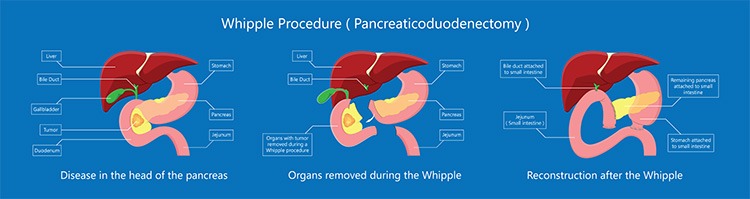
Pancreaticoduodenectomy (Whipple Procedure)
A pancreaticoduodenectomy, often called the Whipple procedure, is a surgery to remove:
- the head of the pancreas
- part of the small intestine (duodenum)
- the lower bile duct
- the gallbladder
After these are removed, the surgeon reconnects the pancreas and bile duct to the small intestine so digestion can continue.
Before Surgery
- Stay active, exercise, and eat a healthy diet to build strength.
- Arrange for help at home after surgery.
- You may need a bowel prep before surgery.
- Surgery lasts 5–6 hours, and you will stay in the hospital for about 7–10 days.
Day of Surgery
- Check in at the Same Day Surgery Unit.
- A nurse will start an IV and give you medications.
- You will go to the operating room (OR) with staff. Your family can wait nearby.
- In the OR, you’ll meet the team. The anesthesiologist will give you medicine to put you to sleep.
After Surgery
- You may spend the first night in the ICU for close monitoring.
- You may have:
- an epidural for pain
- a urinary catheter
- drains near your incision
- a nasogastric (NG) tube to remove stomach fluid
- compression boots to prevent blood clots
On the Hospital Ward
- Nurses will monitor your vital signs and incision.
- Family can visit.
- Your incision (under the ribs, across the belly) will have a dressing and staples.
- Staples come out in about a week, possibly by your doctor or nurse after discharge.
Pain Management
- You will receive regular pain medicine (by IV, epidural, pump, or pills).
- Stool softeners may help with constipation.
- You may feel nauseous or have gas pains—walking helps relieve this.
Activity
- You’ll be encouraged to breathe deeply, cough, and move your legs.
- Expect to walk a little the first day after surgery and increase activity daily.
- A physiotherapist may assist.
- It’s normal to feel tired—build up your strength gradually.
Eating and Digestion
- You will start with IV fluids, then clear liquids, then solid food.
- You may need to eat small meals (4–6 times a day).
- You may lose weight or have diarrhea.
- Some patients need enzyme pills to help digest food.
- There’s a small chance of developing diabetes after surgery.
- A dietitian can help you plan meals.
Going Home
- A nurse will explain home care.
- You may still feel weak, so rest and avoid heavy lifting (over 5 lbs / 2 kg) for 6–8 weeks.
- Do not drive, drink alcohol, or operate machinery if taking narcotic pain meds.
- You’ll get prescriptions and a follow-up appointment.
When to Call Your Doctor
-
Call if you have:
- Fever over 38.5°C (101°F)
- Redness, swelling, discharge, or worsening pain at the incision
- Trouble urinating
- Vomiting, diarrhea, or no bowel movement for 3 days
- Yellowing of the skin or eyes (jaundice)
- Any other concerns
DISCLAIMER:
Call 911 if you are having a medical emergency.
The Whipple Warriors website is for general education only. It does not provide medical advice, diagnosis, treatment, or professional services. Do not use any information from this site to make decisions about your health or medical care.
Always talk to your doctor or healthcare provider about any medical questions or concerns. Never delay or avoid getting medical care based on something you read here.
We are not responsible for how you use the information on this site or on any sites we link to. You visit and use this site at your own risk.
Medical knowledge and treatments change over time. The information on this site or its links may not be up to date, complete, or accurate. Always check with your doctor before making any healthcare decisions.
We do not endorse or recommend any products, treatments, tests, opinions, or other content mentioned on this site or in linked websites, social media pages, or patient stories. We also have no control over the content of those outside links, which may sometimes include offensive material. Use them at your own risk.
For help understanding any health information, please consult your doctor or healthcare provider.
Always check with your doctor before trying anything new. Even small issues can signal bigger problems.